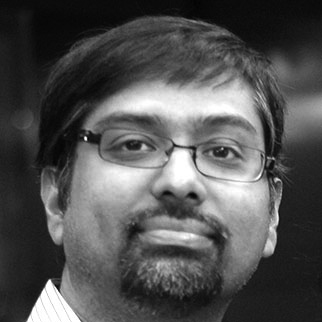
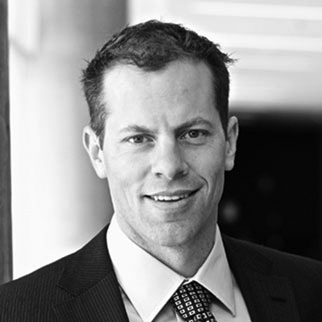
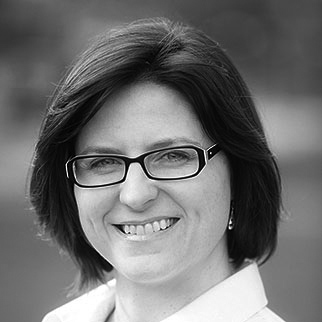
Deep Learning for Process Control: Inspired by the recent successes of deep learning in computer vision and natural language processing, our group is exploring deep reinforcement learning (DRL) as a model-free and maintenance-free framework for process control in industrial settings. Recent work that we’ve published shows promising results for DRL in terms of setpoint tracking performance and adaptability, but there are still many fundamental questions left to explore, including sample efficiency (big data is not always good data), stability guarantees, interpretability and computational challenges. Ultimately, we are interested in the development of smart plants and advanced controllers that can provide a high level of safety and reliability for the industry.
Development of Smart Plants and Intelligent Processes
The Berlinguette Group designs and builds advanced electrochemical reactors to power the planet.
Reactive carbon capture: Our program pioneered electrochemical reactors that convert CO2 capture solutions directly into fuels and chemicals. This work is being commercialized through Sora Fuel, and we continue to develop AI-driven methods to advance this technology.
Electrification of the chemical industry: We are decarbonizing industrial hydrogenation reactions, which account for 4% of global CO2 emissions. To achieve this goal, our team is advancing a membrane reactor “Thor” to drive hydrogenation reactions at high rates of production. These membrane reactors can decarbonize the production of specialty chemicals, fuels, biofuels, pharmaceuticals, and plastics.
Decarbonizing the built environment: Cement production is the largest emitter of CO2, and the global footprint will double by 2050. We are designing and building reactors that use electricity and water, not high temperatures, to generate cement. We produce 75% less CO2 when making cement and concrete.
CO2 Storage: We are exploring reactors capable of storing >50 gigatons of CO2 each year. We are advancing this field using electricity and abundant minerals to permanently capture and store carbon dioxide as rock. We are offering the world the first scalable and accountable way of permanently storing CO2.
Flexible automation: We built self-driving laboratories, such as Ada, to accelerate the deployment of clean energy technologies.
Advanced nuclear fusion: We combine electrochemistry with nuclear fusion sciences to drive fusion events at lower temperatures than currently known. Our mission is to create a low-cost energy source that can scale within the span of a human lifetime.
Director Professor Rosenblatt Professor in Marine Engineering at UBC pkirchen@mech.ubc.ca Home department: Mechanical Engineering Website: Thermochemical Energy Conversion Lab
Research Interests
Thermochemical energy conversion
Combustion
Internal combustion engines
Ion transport membranes
Current Research Projects
Internal Combustion Engines: The vast majority of land and water based vehicles are powered by hydrocarbon fuelled internal combustion engines. Because of their widespread application, the environmental impact of engines through the emission of toxic gases and consumption of finite natural resources must be minimized. To this end, research efforts are focused on understanding the impacts of engine operating parameters such as fuel type, injection strategies, and charge preparation on the fundamental combustion and emission formation processes. An engine testing facility is under development to optically characterize these processes using various optical and thermo-optical techniques. The impact of transient engine operation (i.e. dynamic load and speed conditions) is also being considered, with a focus on developing experimental and analytical tools for this purpose.
Ion Transport Membrane (ITM) Reactors: ITM reactors present a technology with the potential to significantly reduce the capital and operating costs associated with gas separation (e.g. O2 from air). When combined with reactive processes, such as oxy-fuel combustion or partial oxidation of methane, higher conversion rates and product selectivities are possible than with conventional co-feed reactors. My research interests lie in furthering the understanding of the coupling between fuel conversion and gas separation using both numerical and experimental investigations, and applying this knowledge to the development of novel reactor concepts.
Professor mark.johnson@ubc.ca Home department: Earth, Ocean and Atmospheric Sciences & Institute for Resources, Environment and Sustainability (IRES) Website: UBCEcohydrology
Research Summary
Dr. Mark Johnson is working to understand how land use practices influence interactions between hydrological and ecological processes, and how these ecohydrological processes further affect ecosystem services including carbon sequestration. Unraveling interactions between the water cycle and the carbon cycle is essential for improving the sustainability of land and water management, especially under changing climatic conditions. Dr. Johnson’s research in ecohydrology demonstrates that soil carbon processes are also integrally important to the health of freshwater ecosystems and drinking water supplies. Dr. Johnson and his team are testing carbon and water cycle interactions to address questions such as: How much carbon does water transport from the land into freshwater systems? His research can also help to answer very applied questions related to soil fertility and water use such as: How much food can be produced in urban environments, and how much water would that require? To address these and other related questions, Johnson is developing innovative approaches to ecohydrological research in partnership with communities, natural resource management agencies and organizations, and industry.
Research Projects
Agricultural Water Innovations in the Tropics (AgWIT) partnership will test strategies to lower agricultural impacts on water resources while improving the resiliency of tropical agricultural systems to climate change. AgWIT will use a unique network of tropical agricultural water observatories to quantify water footprints and carbon footprints for crops under standard and alternative management practices. AgWIT will test alternative management practices with the goal of increasing agricultural water use efficiency, enhancing soil carbon sequestration, and improving the water quality of tropical agricultural systems. AgWIT will then assess water management decision pathways for rainfed and irrigated crops under current and future climatic conditions.
Carbon Drainage fluxes in natural and human-impacted watersheds
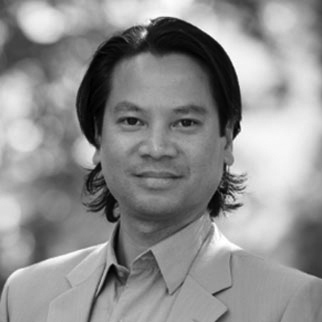
Machine Learning for Chemical Analysis: Research in artificial intelligence (AI) has led to the development of many machine learning algorithms for image recognition. Their ability to analyze large amounts of data and extract meaningful hidden structures is unprecedented. My research interest focuses on combining chemical analytical tools and machine learning for qualitative and quantitative chemical analysis.
Optical Microscopy: We develop high-resolution optical microscopes to investigate biological questions. The resolution of optical microscopy has been limited to ~ 200 nm because of the diffraction limit. Recent developments in super-resolution microscopy has enabled scientists to resolve features as small as 10 nm and visualize cellular structures in unprecedented detail. Our current research is focused on virus-host interactions.
Surface Properties of Water and Ice Nucleation: Water has a relatively simple molecular structure, but the interface of water is a very complex system. We study water interfaces relevant to environmental and industrial applications using nonlinear optical spectroscopy.
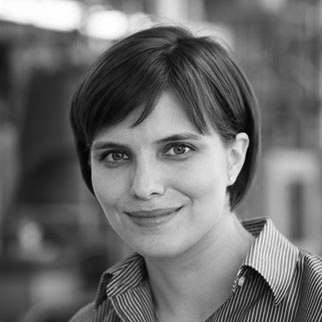
Dr. Lorretta Li led and founded the UBC Cluster for Microplastics, Health and the Environment in 2021 with a group of outstanding researchers. Dr. Li’s research has helped influence strategic planning efforts and key policy decisions on issues related to contaminated sites and contamination by per- and poly-fluorinated alkyl substances (PFASs), as well as polybrominated diphenyl ethers (PBDEs). She has worked with the United Nations Industrial Development Organization (UNIDO) and the Stockholm Convention, Environment Canada, Health Canada, Fisheries and Oceans Canada, and the BC Ministry of Environment in addressing these chemicals of emerging concern.
In the past, Dr. Li has served as a project engineer and as a junior structural engineer, and worked with a number of professional societies and associations. She has made significant technical contributions to her profession. Her findings on metals dispersion and distributions along highway were used by the B.C. Ministry of Transportation (MOT) and Infrastructure. Her research has also been used extensively in environmental assessments along the Sea-to-Sky, Gateway, Okanagan Lake Bridge and Highway 37 Widening projects.