Congratulations to the winner of 2024 Fellow of the Canadian Academy of Engineering

Congratulations to the winner of 2024 Fellow of the Canadian Academy of Engineering


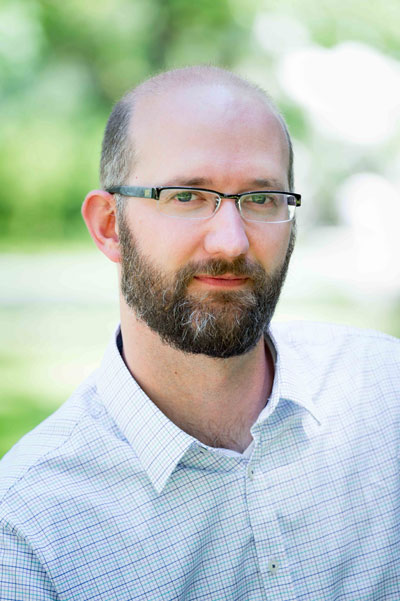
Dr. Bhushan Gopaluni
Department of Chemical and Biological Engineering, UBC

Prof. Bhushan Gopaluni is an internationally renowned expert in process data analytics. He
pioneered the development and application of computational algorithms that characterize and
optimize complex industrial processes. These algorithms transform vast industrial data into
actionable knowledge. His research enables industries to maintain global competitiveness amidst
escalating energy, environment and quality demands. His work resulted in hundreds of research
articles and generated several patents. He has played a key role in educating engineering students
and championed diversity and inclusion. His exceptional leadership and mentorship have
inspired many students and produced leaders in both academia and industry.

Congratulations on being named an inaugural Highly Ranked Scholar by ScholarGPS


ScholarGPS celebrates Highly Ranked Scholars™ for their exceptional performance in various Fields, Disciplines, and Specialties.

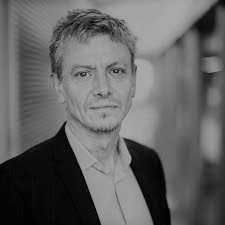
Dr. Shahab Sokhansanj’s prolific publication record, the high impact of your work, and the outstanding quality of his scholarly contributions have placed him in the top 0.05% of all scholars worldwide.


Listed below is a summary of the areas in which he has been awarded Highly Ranked Scholar status based on his accomplishments over the totality of his career (lifetime) and over the prior five years:

Highly Ranked Scholar – Lifetime
#9Bioenergy
#23Biomass

CERC members won one of the three awards under Campus as a Living Lab ‘Grand Challenge’:

The Campus as a Living Lab ‘Grand Challenge’ called for visionary approaches to how British Columbia and Canada can effectively respond and adapt to the climate emergency. 

This year’s competition, attracted faculty and staff from more than 22 academic departments and operational units across UBC Vancouver and Okanagan, resulting in three projects moving forward with a total of $600k in funding.

The details of the CERC project are::

Project: Bioenergy from commercial-municipal organic waste

GRAND CHALLENGE AWARD: $250K

This innovative project at UBC Vancouver explores the potential of utilizing aerobically treated organic waste from municipal green bin programs as a sustainable biomass source for UBC’s Bioenergy Research Demonstration Facility (BRDF). 

The team will address the dual challenges of efficient waste management and sustainable energy production, demonstrating a practical solution to enhance UBC’s operational sustainability.

Priority area: Sustainable Innovations
Faculty lead: Naoko Ellis, Professor, Faculty of Applied Science, Department of Chemical and Biological Engineering
Staff lead: Jason Rako, People and Process Manager, Energy and Water Services, UBC Facilities Group, Thermal Plant Chief Engineer
Co-lead: Sergio Berretta, Adjunct Professor, Faculty of Applied Science, Department of Chemical and Biological Engineering
Co-lead: Xiaotao (Tony) Bi, Professor, Faculty of Applied Science, Department of Chemical and Biological Engineering

Industry partner: Anaconda Systems Ltd.

Amini, Kiana

Kiana Amini

Assistant Professor
kiana.amini@ubc.ca
Home department: Materials Engineering
Website: Amini Lab


Research Interests

  • Electrochemical Energy Storage and Conversion
  • Redox Flow Batteries
  • Electrochemical Carbon Capture Systems
  • In Situ Characterization of Electrochemical Processes

Current Research Work

I am interested in leveraging electrochemistry for the development of electrochemical devices that can facilitate our transition to a cleaner energy future. Within this theme, my research has been concentrated on two key areas.
Firstly, my research is focused on the development of redox flow batteries, an energy storage technology designed for large-scale applications. My goal is to push the boundaries of these systems’ performance metrics, bringing them closer to widespread commercialization. I specialize in electrochemical characterization, battery architecture design, electrolyte design, and the development of in situ characterization techniques for investigation of these batteries.
Secondly, my research is focused on developing electrochemical systems capable of efficiently capturing CO2 through the use of redox-active materials at ambient temperature and pressure and at an acceptable energetic cost. My goal is to present a realistic assessment of the performance and stability of such systems, and to unravel the underlying mechanisms by developing advanced in situ techniques. I am additionally focused on engineering specialized electrochemical cells tailored for this application.

Zhao, Jiaying

Jiaying Zhao

Associate Professor, Department of Pyschology and UBC Sauder School of Business
Canada Research Chair, UBC Sauder Distinguished Scholar
jiayingz@psych.ubc.ca
Home department: https://psych.ubc.ca/profile/jiaying-zhao/
Website: https://zhaolab.psych.ubc.ca/

UBC A PARTNER ON FOUR NEW INITIATIVES FUNDED BY THE CANADA FIRST RESEARCH EXCELLENCE FUND

Dr. Naoko Ellis Co-leading a CFREF Funded project

ACCELERATING COMMUNITY ENERGY TRANSFORMATION (ACET)

UBC researchers will contribute in multiple ways to ACET’s community-led approach to working with B.C. communities to identify their needs and challenges relating to low-energy transitions.

Environment and Climate Change Canada (ECCC) Funding

Dr. Patrick Kirchen has successfully received funding for his project ” Life-cycle analysis of GHGs and CACs for low-carbon marine fuel options for a RORO vessel in the Salish Sea”, congratulations!

Environment and Climate Change Canada (ECCC)

Marcazzan, Paolo

Paolo Marcazzan

Research Manager – Merida Lab
paolo.marcazzan@ubc.ca
Website: https://meridalabs.ca/team/

Harrison, Kathryn

Kathryn Harrison

Professor
kathryn.harrison@ubc.ca
Home department: Political Science


Research Interests

  • Canada
  • Climate and Environmental Politics
  • Comparative Politics
  • Federalism and Local Politics
  • Political Economy
  • Public Policy
  • United States

Biography

Dr. Harrison studies environmental, climate, and energy policy, federalism, and comparative public policy. She is the author of the book Passing the Buck: Federalism and Canadian Environmental Policy and co-author of Risk, Science, and Politics. In addition, she has edited or co-edited several volumes, including Racing to the Bottom? Provincial Interdependence in the Canadian Federation, and Global Commons, Domestic Decisions: The Comparative Politics of Climate Change. She has published extensively in edited volumes and journals, including in Nature Climate Change, Science, the Canadian Journal of Political Science, the Canadian Journal of Economics, and Global Environmental Politics.

Donner, Simon

Simon Donner

Professor
simon.donner@ubc.ca
Home department: Geography
Website: https://simondonner.com/research/


Research Interests

  • Climate Change Science
  • Marine Science
  • Climate Policy

Current Research Projects

  • Drivers and Trends in Marine Climate Extremes: Building on past work on ocean warming and El Niño, our recent research has quantified changes in the frequency and structure of warm-season marine heatwaves and the implications for coastal ecosystems. Ongoing research is focusing on extreme heat and sea-level in the tropical Pacific and on the atmospheric drivers of ocean extremes.
  • Natural Laboratories in the Ocean: The Republic of Kiribati, subject to frequent El Niño-driven marine heatwaves, is a natural laboratory for evaluating how coral reefs cope with climate warming. Since 2005, I have worked with the Kiribati government to track how their reefs respond to climate and local disturbances using SCUBA-based surveys and oceanographic data collection. My group has recently expanded this concept of natural laboratories to the tropical kelp forests of the Galápagos Islands, which may be a relic of a cooler past, or a refuge on a warming planet.
  • Climate Change Risk and Adaptation in the Small Island Developing States: Building on experience working in Kiribati, Fiji and other Pacific island countries, my students and I continue examine to assess climate risks and identify obstacles to adaptation to sea-level rise and other climate hazards. We have looked at the challenges of using science to inform decision-making, international financing for adaptation, and the factors that influence adaptation decisions on the ground. Planned research will examine the emergence of blue carbon projects and the continued challenges in providing sufficient international finance for climate change adaptation and climate change damages.