the Executive summary (shared by Mr. Wilfried Biya, Permanent Observer of IRENA to the United Nations and Chief of New York Office) of the International Renewable Energy Agency (IRENA)’s World Energy Transitions Outlook, which was released during the Berlin Energy Transition Dialogue on 29 March 2022. The Report outlines a pathway for the world to achieve the Paris Agreement goals and halt the pace of climate change by transforming the global energy landscape. This report presents options to limit global temperature rise to 1.5°C and bring CO2 emissions to net zero by 2050, offering high-level insights on technology choices, investment needs, policy framework and the socio-economic impacts of achieving a sustainable, resilient and inclusive energy future.
Watkinson, Paul

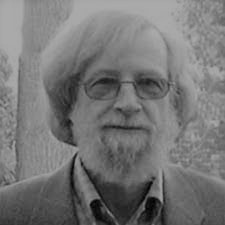
Paul A. Watkinson
Professor Emeritus, Chemical and Biological Engineering
paul.watkinson@ubc.ca
Home department: https://chbe.ubc.ca/a-paul-watkinson/
Website: https://frc.engineering.ubc.ca/
Godin, Robert
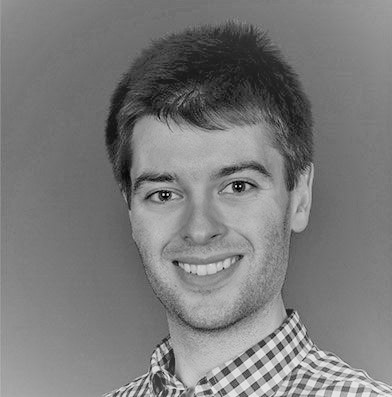
Robert Godin
Assistant Professor
robert.godin@ubc.ca
Home department: UBC Okanagan – Chemistry
Website: SolarSpec: Solar Energy and Spectroscopy Group
Research Interests
- Transient Absorption Spectroscopy/Microscopy to Determine the Charge Carrier Dynamics
- Carbon-Based Photocatalytic Materials
- Sustainable Energy Production
- Sustainable Photochemistry for Water Purification and Chemical Transformations
Current Research Projects
- Carbon Nitride Photophysics: To become cost competitive and see widespread adoption, high photocatalytic efficiencies need to be obtained through scalable manufacturing technologies and use abundant and inexpensive elements rather than rare elements with limited reserves. Carbon nitride (CNx), an organic polymer composed of earth abundant carbon, nitrogen and hydrogen atoms, is so far a leading candidate to fill this need. CNx absorbs visible light, is easy to synthesize from inexpensive precursors such as urea, and shows outstanding chemical and photo stability. Our initial investigations have revealed the presence of a high density of trap states in some of the best performing CNx known to date. Importantly, these trap states reduce the hydrogen production efficiency. Charges relax and lose a significant amount of energy as they fill these trap states, effectively stopping electron transfer to the proton reduction sites. We have set out to better understand the impact of these trap states, and devise synthetic procedures to reduce their prevalence.
- Structure-Property-Activity Relationships in Carbon Nitride: The simple synthetic procedure to make CNx – heating organic powders to high temperatures – allows for a high level of tunability and customisation. Various methods have been established to control aspects such as doping levels, 3D structure and morphology, chemical groups, and to make heterojunctions with a wide range of other materials. While these modifications can dramatically change the photocatalytic activity of the resulting CNx, we often lack a clear picture of the charge carrier dynamics that would allow us to progress further. We will undertake systematic investigations to link the CNx chemical and physical structure with the charge carrier dynamics to develop a holistic view of the photophysical impact of CNx modifications and clarify what controls the solar energy conversion efficiency.
- Carbon Dots Photophysics: Carbon dots, nanoparticles mainly made of carbon, are another exciting class of low-cost, carbon-based photocatalysts. Different types of carbon dots can be distinguished based on the hybridization and arrangement of the carbon atoms, and whether quantum confinement is at play: graphene quantum dots are nanoscopic 2D sheets of graphene with sp2 hybridized carbons; carbon quantum dots have a crystalline graphitic core predominantly with sp2 hybridization; carbon nanodots are amorphous, containing both sp2 and sp3 hybridized carbons, and their excited states are dominated by molecular effects. Although these categories might appear to be neat and tidy, these are best though of as limiting cases and the reality often falls in between them. The ambiguity in the precise structure of synthesized carbon dots has hampered efforts to develop clear models that explain the photophysical behaviour of these intriguing materials. Fundamental questions regarding the nature of the excited state (e.g. excitonic vs separated charges, singlet vs triplet spin state) still remain, and impede progress in incorporating these materials into functional devices. The advanced optical techniques developed in the lab will be useful in answering some of the questions, and give us greater insights in the key parameters that dictate the photophysics of carbon dots.
Al-Dabbagh, Ahmad

Ahmad Al-Dabbagh
Assistant Professor – UBC Okanagan
ahmad.aldabbagh@ubc.ca
Home department: UBC Okanagan’s School of Engineering
Website: Okanagan Laboratory for Control Systems Research
Research Interests
- Control systems
- Automation systems
- Fault diagnosis
- Cyber security
- Alarm management
Current Research Work
- Detection and isolation of faults and cyber attacks
- Control reconfiguration and topological formation
- Event-triggered control and communication
- Remote state estimation
- Alarm systems design and alarm floods mitigation
- Recommendation systems design for operator actions
- Causality, prediction, and root cause analysis
Tu, Qingshi
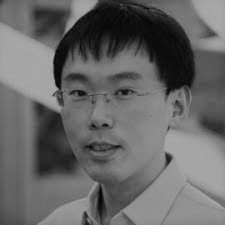
Qingshi Tu
Assistant Professor, Industrial Ecology/Sustainability Engineering
qingshi.tu@ubc.ca
Home department: https://forestry.ubc.ca/faculty-profile/qingshi-tu/
Department of Wood Science
Website: https://grouptu.forestry.ubc.ca/
Clift, Roland

Roland Cliff
Adjunct Professor
roland.cliff@ubc.ca
Home department: Chemical and Biological Engineering
Research Interests
- Industrial ecology
- Life Cycle Assessment
- Energy Systems
- Environmental Policy
Current Research Areas
Emeritus Professor of Environmental Technology and founding Director of the Centre for Environmental Strategy at the University of Surrey, UK; previously Head of the Department of Chemical and Process Engineering at the University of Surrey. He is Visiting Professor in Environmental System Analysis at Chalmers University, Sweden and Adjunct Professor in Chemical and Biological Engineering at the University of British Columbia, Canada; past Executive Director and President of the International Society for Industrial Ecology; and a member of Rolls-Royce’ Environmental Advisory Board.
Roland is a past member of the UK Eco-labelling Board, of the Royal Commission on Environmental Pollution (RCEP), the Science Advisory Council of the Department of the Environment, Food and Rural Affairs (DEFRA), the Royal Society/Royal Academy Working Group on nanotechnology and the Working Group which drafted and updated the BSI/Defra/Carbon Trust Standard on carbon labelling, PAS 2050. In 2004-5, he acted as Expert Adviser to a House of Lords Select Committee enquiry into energy efficiency. In 2012-14, he served as Review Editor for the Industry chapter of Working Group III (Mitigation) of the 5th Assessment Report (AR5) of the Intergovernmental Panel on Climate Change (IPCC).
IRES & CERC seminar: Understanding Air Quality with Lower-cost Sensors: Technical and Community Considerations for Impactful Research

Abstract: Increasingly, lower-cost air pollution sensors are being used by academics, govern-ment agencies and community organizations to understand local patterns of air quality and the impacts of sources such as traffic and wildfires. Given that this research typically happens in community settings (e.g., campus or community as a ‘living lab’), there are a number of important technical and community considerations that must be addressed. These considerations can range from sensor siting, to stakeholder relationship building, to data reporting and more. In this talk, I will go over some recent lower-cost sensor research studies in Metro Vancouver and explore the air quality science outcomes, as well as provide insights into how these kinds of studies are designed and executed for maximum impact.
This seminar is co-sponsored by UBC Clean Energy Research Centre and UBC IRES
AERL 120 (2202 Main Mall, Vancouver, BC V6T 1Z4) or via Zoom (registration required)
REGISTER in advance for this Zoom seminar.