CERC Seminar - May 2021

CERC Seminar – May 2021

CERC Seminar – May 2021

CERC Seminar

New Generation Electrocatalysts for Fuel Cells

May 25, 2021 @ 11:00 AM

Abstract

Platinum Group Metal-free (PGM-free) catalysts have been extensively developed for both Proton Exchange Membrane (PEM) and Alkaline Exchange Membrane (AEM) fuel cells aiming automotive, stationary and portable applications. In this lecture we will address the critical challenges that our team has faced on the way to practical application of such catalysts.

Over the last decade or so (while at the University of New Mexico), our team has developed the Sacrificial Support Method (SSM) as a main approach for templated synthesis of hierarchically structured electrocatalysts materials. In this method the catalysts precursors are being absorbed on, impregnated within or mechanically mixed with the support (usually mono-dispersed or meso-structured structured silica), thermally processed (pyrolyzed) and then the silica support is removed by etching to live the open frame structure of a “self-supported” material that consists of the catalysts only.

The makeup and structure of the active site/sites of the PGM-free ORR electro-catalysts, including geometry (coordination) and chemistry (composition and oxidation state) remain contentious even after 50 years of research. There is an emerging agreement that iron and nitrogen functionalities, displayed on the surface if the carbonaceous substrate/support, govern ORR activity. This is often combined with a broadly accepted hypothesis that micro-porous surface area plays a critical role forming the active site. Candidate structures participating in ORR include multitudes of nitrogen defect motifs in the carbon matrix of different degrees of graphitization, with metal incorporated as metal nano-particles, corresponding (native) oxides and/or as atomically dispersed, oxidized metal species, linked (coordinated) to nitrogen defects in carbonaceous matrix in a variety of possible configurations. This presentation will attempt to address rational design and performance metrics of M-N-C electrocatalyst based on a broad experimental set of data. Scientific and engineering technology challenges will be discussed in the context of maturtion of Polymer Electrolyte Fuel Cells (PEMFC) and their market penetration.

This lecture will review the applications of this new class of electrocatalyst across several fuel cell applications: from automotive to microbial and from regenerative electrolyzer/ fuel cell units to water purification and de-salination devices. These catalysts allowed also broad introduction of state-of-the art electrochemical technology in microbial electrochemical devices: microbial fuel cells, bio-electrochemical electrolyzers and advanced water treatment technologies.

New/emerging directions for extending these materials types to catalysis of CO2 electro-reduction and N2 low temperature, low pressure electro-reduction aiming potentially at electrochemical ammonia synthesis will be discussed as well.
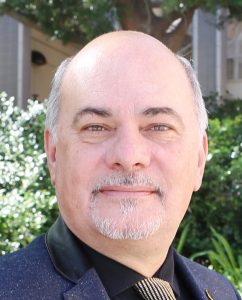
Plamen Atanassov

Chancellor’s Professor of Chemical & Biomolecular Engineering,  Materials Science & Engineering and Chemistry, University of California, Irvine

ZOOM Meeting ID: 671 7500 9520 Passcode: 2360
CERC Research Seminar – April 2021

CERC Research Seminar – April 2021

CERC Seminar

Understanding Coupled Transport and Reaction Processes in Fuel Cells Using Advanced Diagnostic Techniques

April 26, 2021 @ 11:00 AM

Abstract

around the world. However, these power sources are intermittent and reliable management of renewable resources on the power grid requires a combination of flexible demand and energy storage. As an example, California had more than 27.4 GW of electricity generated by solar energy in 2019, generating nearly 20 % of the state’s electricity. However, the state observed “duck-curve” of net energy demand at any day, due to renewable energy being overproduced and curtailed during daytime and need of high ramp rate for baseload to meet the demand in the evening, when solar energy is scarce. Furthermore, recent power-grid blackouts, heatwaves and fires immensely stressed the grid, specifically in its transmission sector, necessitating solutions that are not easy to provide. Hydrogen can act as a long duration energy storage medium to address the grid intermittency and to relax the transmission demand. Having hydrogen introduced into natural gas pipelines, even at only 5 % can help offset seasonal fluctuations and also improve grid resiliency.

Low temperature fuel cells, such as polymer electrolyte fuel cells (PEFCs) or alkaline membrane fuel cells (AMFCs) are promising energy-conversion technologies for transportation and grid-storage sectors. Currently, cost and durability are two major issues that these technologies must overcome to be cost-competitive with non-renewable energy technologies. In addition, heat and water management set restrictions on the overall fuel cell stack design, as heat removal during the operation and liquid water management during start-up and shut down are critical transport processes that the fuel cell stack designers have to optimize. At higher operating temperatures, large thermal gradients in the system promote water removal in a vapor phase.  To achieve maximum water permeation and consequently higher current densities, it is necessary to understand an interplay between pressure- and capillarydriven liquid water transport and phase-change induced (PCI) flow due to evaporation/condensation in porous gas-diffusion layers (GDLs). These highly porous materials have effective conductivity depend on the liquid water content adding complexity to heat and mass transport. Here, synchrotron nano- and micro- X-ray computed tomography is used to characterize fuel cell materials under insitu and operando conditions. I will discuss various experimental procedures for synchrotron imaging to further fundamental understanding of structure-property phenomena in the fuel cells multi-scale materials and provide a roadmap for the design of nextgeneration materials. To complement the experimental effort, modeling studies will be presented, as    well.

Biography

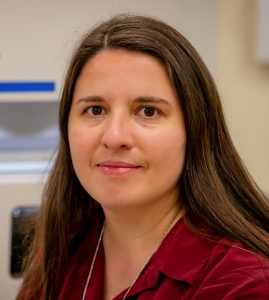
Dr. Zenyuk holds a B.S. (2008) in mechanical engineering from the New York University Tandon School Engineering. She continued her studies at Carnegie Mellon University, where she earned M.S. (2011) and Ph.D. (2013) in mechanical engineering. Her graduate work focused on fundamental understanding of electric double layers in electrochemical energy-conversion systems. After a postdoctoral fellowship at Lawrence Berkeley National Laboratory in Electrochemical Technologies Group, Zenyuk joined the faculty of the Mechanical Engineering Department at Tufts University in 2015. In July 2018 she joined Department of Chemical and Biomolecular Engineering at University of California, Irvine, where she is also an Associate Director of the National Fuel Cell Research Center. At UC Irvine, Zenyuk’s group works on enabling energy solutions by researching low-temperature hydrogen fuel-cells, Li-metal batteries and electrolyzers. Zenyuk works on design strategy encompassing novel materials, diagnostic tools and device-level testing. She is a recipient of the NSF CAREER award (2017), Interpore society Fraunhofer Award for Young Researchers (2017), Research Corporation for Science Advancement, Scialog Fellow in Advanced Energy Storage (2017-2019), Electrochemical Society (ECS) Toyota Young Investigator Award (2018), UCI Samueli School of Engineering Early Career Faculty Excellence in Research Award (2019) and ECS Energy Technology Division Srinivasan Young Investigator Award (2021). Prof. Zenyuk published over 50 journal publications and delivered more than  50 invited presentations on topics of energy conversion and storage.

ZOOM Meeting ID: 625 2088 7022 Passcode: 2360

CERC Research Seminar – March 2021

CERC Research Seminar – March 2021

CERC Seminar

RNG in BC: some observations from the field

March 29, 2021 @ 11:00 AM

Abstract

Late in 2019, I was invited to evaluate a proposed RNG facility to be built in the lower mainland. I knew
that meeting BC’s GHG targets would require fuel switching to electricity or RNG in legacy buildings (>50% of buildings standing today will still provide shelter in 2050) . I also knew that over 10,000 digesters were operating in the EU. So would RNG be cheap and plentiful in BC?

In this talk, I provide a summary of what I learned about barriers to the success of the RNG play in BC. I am hoping that by talking about these issues, we can prompt appropriate regulatory market shifts to unleash the potential for using RNG where appropriate.

Biography

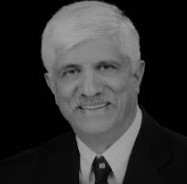
Hadi Dowlatabadi’s research is at the nexus of humans, technology and the environment. He has studied
climate change and its related response strategies since 1986. His projects are solution oriented and usually fall outside familiar disciplinary grounds. He sees the world as a dynamic non-equilibrium heterogeneous system where the search for complexity leads to paralysis and over-simplification spells trouble.
Hadi has a wide range of publications from books on how to choose electricity generation technologies to
different determinants of malaria around the world. He has over 150 peer-reviewed papers and has
supervised almost three-dozen PhDs. He has served on the editorial boards of five journals. Hadi is a cofounder of half a dozen companies attempting to refine and market technologies that pave the way to a
zero carbon economy. He is a University Fellow at Resources for the Future, a Washington DC think-tank. He is also Adjunct Professor at Carnegie Mellon University’s Department of Engineering & Public Policy.

ZOOM Meeting ID: 613 2711 9648 Passcode: 2360

CERC Research Seminar – February 2021

CERC Research Seminar – February 2021

CERC Seminar

The Path and Opportunities Toward Hydrogen Energy Development

February 22, 2021 @ 3:00 PM

Abstract

The hydrogen development faces four major challenges, or requires “Four Miracles”, as suggested by Dr. Steven Chu (the former Secretary of US DOE): (1) the hydrogen production, (2) the hydrogen storage and delivery, (3) the fuel cell durability and cost, and (4) the hydrogen distribution infrastructure. In this talk, I first focus on the breakthrough technology development that resolves the second and the four challenges. The technology is to store hydrogen at ambient conditions with high gravimetric and volumetric densities based on the concept of the liquid organic hydrogen carrier (LOHC). This technology has been demonstrated on board the mobile applications and is in the process of commercialization. I believe this LOHC technology will replace the existing compressed hydrogen storage technology, to enable the safe and efficient hydrogen storage and to make the hydrogen economy a reality.

Next, I present some technology advancements that address the first and the third challenges. I describe a thermal select development that turns the municipal waste, an environment hazard, into the hydrogen, a clean source of energy. Then I describe some developments in next generation fuel cells and hydrogen internal combustion engine. This presentation is non-technical. In addition to primary technology developments, I will present some applications and business developments. Most of the developments I have been involved with are in China and Europe, but I think there are huge opportunities for Canada.

Biography

Hong Chen is Professor in Shanghai Advanced Institute of Finance (SAIF) at Shanghai Jiaotong University, where he served as the deputy dean and the founding director of DBA program. Before joining SAIF, he was an Alumni Professor in Supply Chain Management in Sauder School of Business at the University of British Columbia. He was one of the founding faculty members and associate dean at Cheung Kong Graduate School of Business. He received his B.S. degree from Xi’an Jiaotong University, and his M.S. and Ph.D. degrees from Stanford University.

In the last few years, Dr. Chen’s research interests are in development, market and finance of clean energy, particular hydrogen energy. He has been a senior advisor for Hynertech, a hydrogen startup company. He is on the Board of Yancon Group Co, a Fortune 500 energy company. His research interests also include applied probability, operations and supply chain management, healthcare policy and management, real estate and corporate finance. He has consulted and written many teaching cases on some of the best-known companies in China, and has taught executive programs at almost all the top business schools in China.

CERC Research Seminar – January 2021

CERC Research Seminar – January 2021

Collaborating seminar with CHBE

Utilization and Electrocatalytic Conversion to Products

January 15, 2021 @ 1:00 PM

Abstract

Renewably powered CO2 electrocatalysis presents an opportunity to de-carbonize fuel and chemical production. Ultimate application of CO2 reduction will require electrocatalytic systems that provide reactants, electrons, and products at high rate and efficiency, and that are compatible with established upstream and downstream processes. I will outline our progress on membrane electrode assembly based cells to meet this challenge. To accommodate O2 impurities from upstream processes we develop a hydrated ionomer catalyst coating that selectively slows O2 transport and stabilizes the copper catalyst.  To increase reaction rate and energy efficiency we develop an adlayer catalyst strategy that increases local CO2 availability and tunes intermediate adsorption for ethylene production.  For ethanol production we focus on minimizing product cross-over to the anode, targeting ethanol production in excess of the 10wt% – comparable to bio-ethanol production and compatible with downstream processes. Lastly I will highlight learnings, challenges and opportunities arising from our system scaling efforts in the 2020 Carbon XPRIZE competition.

Biography

David Sinton is a Professor and Canada Research Chair in the Department of Mechanical & Industrial Engineering at the University of Toronto. Prior to joining the University of Toronto, Dr. Sinton was an Associate Professor and Canada Research Chair at the University of Victoria, and a Visiting Associate Professor at Cornell University. The Sinton Lab develops fluid systems for energy applications. The group is application-driven and is currently developing fluid systems to produce renewable fuels and feedstocks from CO2. The group previously developed a library of industrial fluid testing systems to improve chemical performance in the energy industry, now commercialized through the startup Interface Fluidics Ltd.  Dr. Sinton was selected to be an NSERC E.W.R. Steacie Memorial Fellow in 2016. He is also a Fellow of the American Association for the Advancement of Science, and the Canadian Academy of Engineering.

Kheirkhah, Sina

people


Sina Kheirkhah

Associate Professor
sina.kheirkhah@ubc.ca
Home department: UBCO School of Engineering – Mechanical
Website: Combustion for Propulsion and Power Laboratory


Research Interests

  • Combustion
  • Turbulence
  • Laser-Based Diagnostics
  • Low/Zero Carbon Fuels
  • Sprays
  • Gas Turbine Engines.

Research Projects

  • Thermoacoustics: Thermoacoustics (heat release and pressure) oscillations often arise in combustion equipment, e.g., gas turbine engines. In-phase heat release and pressure oscillations result in a positive net energy transfer to the engine, which causes resonance, and, in extreme cases, engine destruction. Studying dynamics of pressure and heat oscillations allows for understanding the underlying reasons that drives themoacoustic oscillations. This understanding is crucial for development of themroacoustic mitigation technology.
  • Turbulent Premixed Combustion: Development of current and next generation gas turbine engine combustors requires computation fluid dynamics efforts, specifically, large eddy simulations. These simulations substantially rely on accurate sub grid scale models that can be obtained from experiments. These models will have to be developed for conditions that replicate real engineering applications. Figure below demonstrates how improving turbulence conditions towards those of realistic engineering applications changes topology of turbulent premixed flames.
  • Flame-Vortex Interaction: Turbulence is a complex subject by nature. It is even more complex at the presence of heat release- that is when flames are present. Interaction of turbulent flow with flame fronts simplified to interaction of an individual vortex with a flame surface can provide stepping stones towards understanding and solving the complex problem of turbulent combustion. Studying this interaction allows for development of efficiency functions used in simulation of turbulent flames that are in turn utilized in design of engineering equipment. This project requires combination of several high resolution and/or high speed cameras along with pulsed lasers. Thus, the project is currently performed within measurement campaigns and in collaboration with Professors Fabien Halter (from University of Orleans, France) and Adam Steinberg (from University of Toronto, Canada).

Sokhansanj, Shahab

people

Shahab Sokhansanj

Adjunct Professor
shahab.sokhansanj@ubc.ca
Home department: https://chbe.ubc.ca/shahab-sokhansanj/
Website: https://biomass.ubc.ca/
Chemical and Biological Engineering

Yadav, Vikram

people

Vikram Yadav

Associate Professor, Chemical and Biological Engineering
vikramaditya.yadav@ubc.ca
Home department: https://chbe.ubc.ca/vikramaditya-g-yadav/
Website: https://biofoundry.sites.olt.ubc.ca/