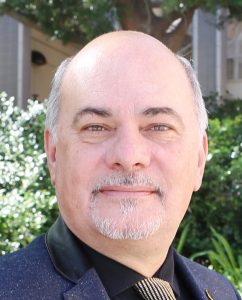
Cornelis, Jean-Thomas

Cornelis, Jean-Thomas

people

Jean Thomas Cornelis

Associate Professor, Applied Biology (Soil Science)
jt.cornelis@ubc.ca
Home faculty: Land and Food Systems
Website: SoilRes3 Lab

Research Interests

  • Soil Biogeochemical Processes
  • Soil-Plant Feedback Interactions
  • Biogeochemical Cycling of Elements 

Current Research Areas

  • Soil-Plant Feedbacks: By optimizing soil-plant-microbiome interactions, we aim to maximize the co-benefits of root exudation to support agroecosystem productivity and sustainability. Focusing on microscale processes in the rhizosphere, the hot spot of soil-plant-microbe interactions, allows us to study their contribution to root exudation and plant-microbe interactions. We are studying the intertwined feedback systems between plants, microbes, and soil in slightly nutrient-limiting conditions to maximize plants natural ability to forage for nutrients.
  • Land-People Relationships: We investigate the duality of human interactions with ecosystems that affect soil properties and functioning. Specifically, we aim to understand the impacts of humans on soil carbon dynamics, ecosystem nutrient cycling, and soil isotopic geochemistry. By studying the large and small-scale implications of forest management and stewardship, we hope to contribute towards the development of more resilient ecosystems. We aim to examine the impact of human relationships with the land across time scales, from deep time association to brief contact. Working with Indigenous partners, we hope to contribute towards the revitalization of ancestral land stewardship practices.  
  • Energy and Nutrient Cycling: We work to take research from the lab to the landscape, attempting to create practical and scalable solutions as tools for agricultural climate change adaptation. We look at micro-scale processes within the larger landscape through Life Cycle Assessments (LCA), field, and greenhouse trials. We embrace the flow of nutrients between ecosystems to investigate the cycling of these nutrients within soils. We are currently exploring biochar produced from forestry residues and its application to agricultural systems, working to understand the impact of this application within soil processes. We take stakeholder driven questions and translate intricate, localized soil-plant interactions into a broader context, providing digestible insights for decision-makers. We’re motivated by systems thinking and a holistic vision, promoting nutrient cycling, residuals utilization, and creating resilience within agricultural systems.

Gladwin, Derek

people

Derek Gladwin

Associate Professor
derek.gladwin@ubc.ca
Sustainability Fellow, Centre for Interactive Research on Sustainability
Home Department: Language & Literacy Education
Website: Systems Being Lab


Research Interests

  • My interdisciplinary research, which has spanned various phases of development and evolution over the years, broadly considers the following educational inquiry: how might we create and explore conditions to deal with complex issues, such as socio-ecological impacts and energy transition, through multiple forms of learning and knowledges that transcend disciplinary interventions?
  • Systems Literacy – the capacity to identify, interpret, co-create, relate to, and communicate about how systems work, transcending both the fragmentation of siloed disciplines and reductive models of educational inquiry.

CERC Research Seminar – October 2021 (Joint seminar with China-Canada bioenergy Centre)
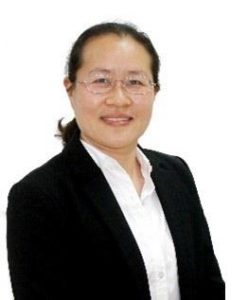
CERC Research Seminar – October 2021 (Joint seminar with China-Canada bioenergy Centre)

Joint seminar with China-Canada bioenergy Centre
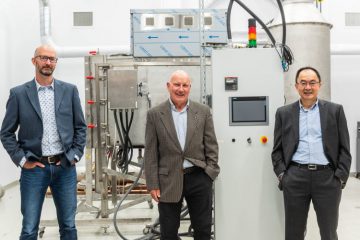
Development of biomass pyrolysis polygeneration and pyrolysis product upgrading

October 21, 2021 @ 4:00 PM

Abstract

As the only carbon contained renewable energy resources, the utilization of biomass is the key for the problem between energy and environment. Pyrolysis can convert biomass to gas fuel, liquid oil and solid char efficiently, it can convert biomass to high quality fuel, and is one of the main route for biomass utilization. Technology of polygeneration based on biomass pyrolysis was put forward with target product controlling theory, and the operation experiment on the pilot and commercial size had also finished. The volume content of combustible composition in bio-gas would be above 70 vol %, especially, the volume content of CH4 would be above 22 vol %, while the LHV of gas would up to 15 MJ/Nm3. It is a good quality gaseous fuel for user. At the same time, a higher performance on the adsorption and combustion was obtained for the solid char product while the liquid oil was enriched more light weight composition such as phenols and acetic acid. The technology economic and environmental analysis shown that this technology has a good economy and environment performance compared with other biomass conversion technology. A further upgrading of the pyrolytic products for H2 rich gas fuel, liquid chemicals and solid carbon contained materials were carried out. For example, after nitrogen doping, the char product was converted to a good electrode material with the specific capacitance ~300 F/g. It will be expected as a better biomass conversion technology to enhance the utilization level of abundant biomass resources in China.

Biography

Prof. Yang’ research is focused on Biomass pyrolysis/gasification for H2 enriched gas fuel, liquid bio oil and carbon contained materials and chemicals, also working on the fundamental mechanism exploration of biomass thermochemical conversion process. So far, she has published over 200 SCI papers, and 8 were cited in ESI, and the highest SCI cite for 1 paper is over 3000. Now she owns Newton Advanced Fellowships (2018) and the Most Cited Chinese Researchers (Elsevier, 2014-2020) and the National Science Fund for Excellent Young Scholars program in 2016 (China) and Distinguished Young Scholars Program in 2021. She is associated editor of Fuel Processing Technology, and board member of Energy Conversion and Management, Fuel, Journal of the Energy Institute, and Journal of Analytical and Applied Pyrolysis.

ZOOM Meeting ID: 673 6194 3037 Passcode: 031209

Lee, Jongho

people

Jongho Lee

Associate Professor, Environmental Systems Engineering
jongho.lee@civil.ubc.ca
Home department: https://civil.ubc.ca/jongho-lee/
Website: CLEAN Lab

Research Interests

  • Membranes
  • Nanoporous Media
  • Electrokinetics
  • Resource Recovery (energy, biochemicals, metals)
  • Desalination
  • Water/Wastewater Treatment

Research Projects

  • Harvesting Resources from Wastewater: Wastewater is increasingly recognized as a valuable water, nutrient, and energy source.  Effective separation processes are therefore essential to selectively harvest the target resource from the wastes.  We develop membrane technologies to effectively harvest valuable resources from challenging wastewater, including methane, ammonia, and high-value organic chemicals.
  • Multi-Functional Membrane Development: Fouling is a major hurdle in membrane-based desalination, water/wastewater treatment processes, and resource recovery from wastewater. Through surface chemistry, polymer chemistry, and nanomaterial-based surface modification, we develop multi-functional membranes that simultaneously control fouling on the surface and fast and selective transport of water or other target chemical species.  Recently, we have developed simultaneously anti-fouling and anti-wetting membranes that can enable the desalination of hyper-saline, extremely challenging industrial wastewater.
  • Water Transport Phenomena in Nano-confined Spaces: Water in nano-confined space exhibit intriguing physics including fast transport, which allows for developing high-performance separation processes.  We develop nanoporous media platforms to investigate water behaviors in nano-confined space and apply the findings for effective separation processes.
  • Bio-mimetic Water Treatment: Plants in nature possess exotic structures for effective water uptake in harsh environments and the removal of unwanted species.  Inspired by natural plants, we design nanoporous media and implement them for engineering applications including desalination, stormwater removal, and tailings treatment.

Fatmi, Mahmudur

people

Mahmudur Fatmi

Associate Professor
mahmudur.fatmi@ubc.ca
Home department: UBCO School of Engineering – CIVIL
Website: UBC integrated Transportation Research (UiTR)


Research Interests

  • Travel Demand Forecasting
  • Transportation and Land Use Interaction
  • Travel Behaviour Analysis
  • Smart and Shared Mobility
  • Urban System Microsimulation
  • Activity-Based Modelling
  • Transportation and Residential Emissions And Energy Modelling
  • Econometric Modelling
  • Agent-Based Microsimulation, Survey Design and Methods

Current Research Projects

  • Agent-based Microsimulation of Regional Transportation and Energy Systems: UiTR primarily focuses to develop a new generation agent-based integrated transportation and land use modelling system that integrates population demographics, location choice, vehicle ownership, and daily activities within a unified modelling framework to predict the changes in land use pattern, transportation network and the environment over time and space for an entire urban region. The model, known as STELARIS, has the capacity to test the impacts of unprecedented events such as COVID-19 and newer technologies such as autonomous and electric vehicle usage. The fundamental contribution of this research is to disentangle the interactions among transportation-related decisions and changes occurring at different stages of an individual’s life; for example, how our decisions of where to live interact with our decisions of how many vehicles to own and which travel mode to choose. Therefore, this tool simulates agents’ activities over time to predict the evolution and interactions among transportation decisions such as mode choice, land use configuration such as residential location choice, life-cycle events such as birth of a child, and their impacts on the urban environment such as vehicular emissions and residential energy consumption. This research develops advanced econometrics, machine learning and microsimulation modelling techniques to address the two-way feedback between transportation and land use decisions, which in-turn improves the predicting accuracy and consequently assists in effective transportation and land use policy making and infrastructure investment decision-making. A relevant example research output can be found below:
  • Transportation and Climate Action Research: This inter-disciplinary research adopts an integrated approach to collect newer data and develop a novel modelling system to better assess travel, location choice and vehicle ownership behaviour, and emissions, followed by developing and testing emerging policies to reduce vehicular emissions. This study will evaluate the evolution and the longer-term effects of COVID-19 on travel behaviour including housing, vehicle ownership, in-home and out-of-home activities, mode choice, and how that impact the carbon footprint. The scope includes Metro Vancouver and Central Okanagan regions from BC. A multi-disciplinary team of researchers from the two UBC campuses are involved: Dr. Mahmudur Fatmi, Dr. Khalad Hasan, Dr. Andrea MacNeil, Dr. Rehan Sadiq, Dr. Kasun Hewage, Dr. Naomi Zimmerman, Dr. Jon Corbertt. The project also involves local, regional, provincial, and federal governments and agencies such as City of Kelowna, City of West Kelowna, City of Vancouver, District of North Vancouver, Metro Vancouver, Transport Canada, BC Ministry of Energy, Mines and Low Carbon Innovation, among others. The project has been funded by the Environment and Climate Change Canada (ECCC) under their Climate Action and Awareness Fund (CAAF).
  • Activity Base Modelling: This research focuses on developing state-of-the-art travel demand forecasting models particularly, contributing to the development of an agent-based travel activity simulator. Activity-based modelling approach has been adopted to understand and predict individuals’ activities including in-home activities such as work-from-home and travel activities such as mode choice, vehicle choice, travel partner choice, and route choice decisions, among others. Alternative modelling methods are developed to better capture the interactions among individual’s decision-making processes and further translate such behaviour within a microsimulation environment for improved forecasting. We have also invested significant efforts to model the demand for sustainable alternative transportation options such as biking, as well as investigate the effects of unprecedented socio-economic shocks such as COVID-19 on travel demand. This research assists in developing strategies for travel demand management such as flexible working hours, and emissions reduction and investing in sustainable transportation modes.

CERC Research Seminar – May 2021

CERC Research Seminar – May 2021

CERC Seminar

New Generation Electrocatalysts for Fuel Cells

May 25, 2021 @ 11:00 AM

Abstract

Platinum Group Metal-free (PGM-free) catalysts have been extensively developed for both Proton Exchange Membrane (PEM) and Alkaline Exchange Membrane (AEM) fuel cells aiming automotive, stationary and portable applications. In this lecture we will address the critical challenges that our team has faced on the way to practical application of such catalysts.

Over the last decade or so (while at the University of New Mexico), our team has developed the Sacrificial Support Method (SSM) as a main approach for templated synthesis of hierarchically structured electrocatalysts materials. In this method the catalysts precursors are being absorbed on, impregnated within or mechanically mixed with the support (usually mono-dispersed or meso-structured structured silica), thermally processed (pyrolyzed) and then the silica support is removed by etching to live the open frame structure of a “self-supported” material that consists of the catalysts only.

The makeup and structure of the active site/sites of the PGM-free ORR electro-catalysts, including geometry (coordination) and chemistry (composition and oxidation state) remain contentious even after 50 years of research. There is an emerging agreement that iron and nitrogen functionalities, displayed on the surface if the carbonaceous substrate/support, govern ORR activity. This is often combined with a broadly accepted hypothesis that micro-porous surface area plays a critical role forming the active site. Candidate structures participating in ORR include multitudes of nitrogen defect motifs in the carbon matrix of different degrees of graphitization, with metal incorporated as metal nano-particles, corresponding (native) oxides and/or as atomically dispersed, oxidized metal species, linked (coordinated) to nitrogen defects in carbonaceous matrix in a variety of possible configurations. This presentation will attempt to address rational design and performance metrics of M-N-C electrocatalyst based on a broad experimental set of data. Scientific and engineering technology challenges will be discussed in the context of maturtion of Polymer Electrolyte Fuel Cells (PEMFC) and their market penetration.

This lecture will review the applications of this new class of electrocatalyst across several fuel cell applications: from automotive to microbial and from regenerative electrolyzer/ fuel cell units to water purification and de-salination devices. These catalysts allowed also broad introduction of state-of-the art electrochemical technology in microbial electrochemical devices: microbial fuel cells, bio-electrochemical electrolyzers and advanced water treatment technologies.

New/emerging directions for extending these materials types to catalysis of CO2 electro-reduction and N2 low temperature, low pressure electro-reduction aiming potentially at electrochemical ammonia synthesis will be discussed as well.

Biography


Dr. Plamen Atanassov
Chancellor’s Professor of Chemical & Biomolecular Engineering,
Materials Science & Engineering and Chemistry,
University of California, Irvine

ZOOM Meeting ID: 671 7500 9520 Passcode: 2360